Reducing antibiotic resistance through the commercialization and adoption of nonantibiotic methods to
control bacterial infections in Pakistani poultry production
Funding Agency: International Development Research Centre (IDRC), Canada
Collaborating Institutions:
- University of Sargodha, Sargodha, Pakistan
- Purdue University, West Lafayette IN USA
- University of the Punjab, Lahore, Pakistan
Livestock and Poultry keepers in low—and middle-income countries (LMICs) are
highly affected by the increase in infectious disease outbreaks and loss in livestock productivity,
which
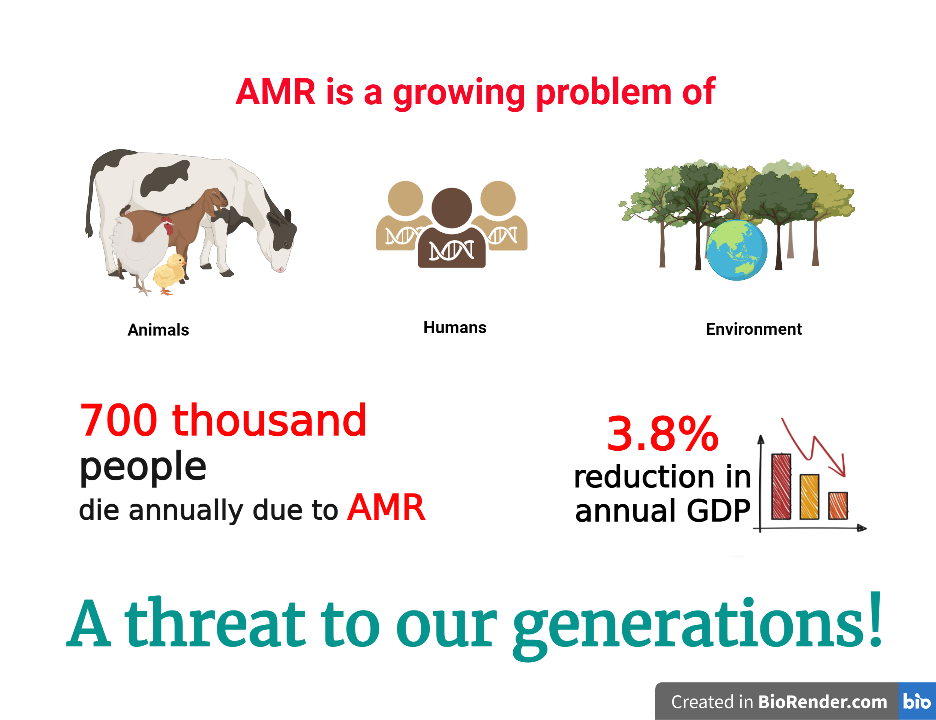
ultimately endangers food security and disrupts international trade. At the same time, the contamination
of
animal products and the wider environment with antimicrobial-resistant bacteria is a risk factor for
humans,
animals, and the environment.
In 2016, the UN General Assembly recognized AMR as a global threat that disproportionally affects people
in
LMICs. The international community was called upon to rise to the complex challenge of AMR and take
urgent
action.
The Initiative
InnoVet-AMR responds to a need identified by the international scientific and
development communities. It is supported by high-level policy processes, including the UN political
declaration on AMR (2016), G7/20, Global Health Security Agenda and Action Plan, and the Global Action
Plans
of the World Health Assembly and the World Organization for Animal Health.
The initiative builds on DHSC’s expertise championing innovation by supporting research and technology
to
improve lives. It also draws on IDRC’s history as a development research funder with decades of
experience
building knowledge-focused cross-sector partnerships.
Through InnoVet-AMR, IDRC and DHSC aim to achieve two key objectives:
Support research that will identify innovative veterinary solutions, including vaccines and
alternative
solutions, to reduce the use of antimicrobials in livestock and aquaculture operations in LMICs.
Build effective partnerships to coordinate better discovery, development, and sustainable delivery
of
innovative veterinary solutions to reduce the use of antimicrobials in livestock and aquaculture
operations in LMICs.
The Project
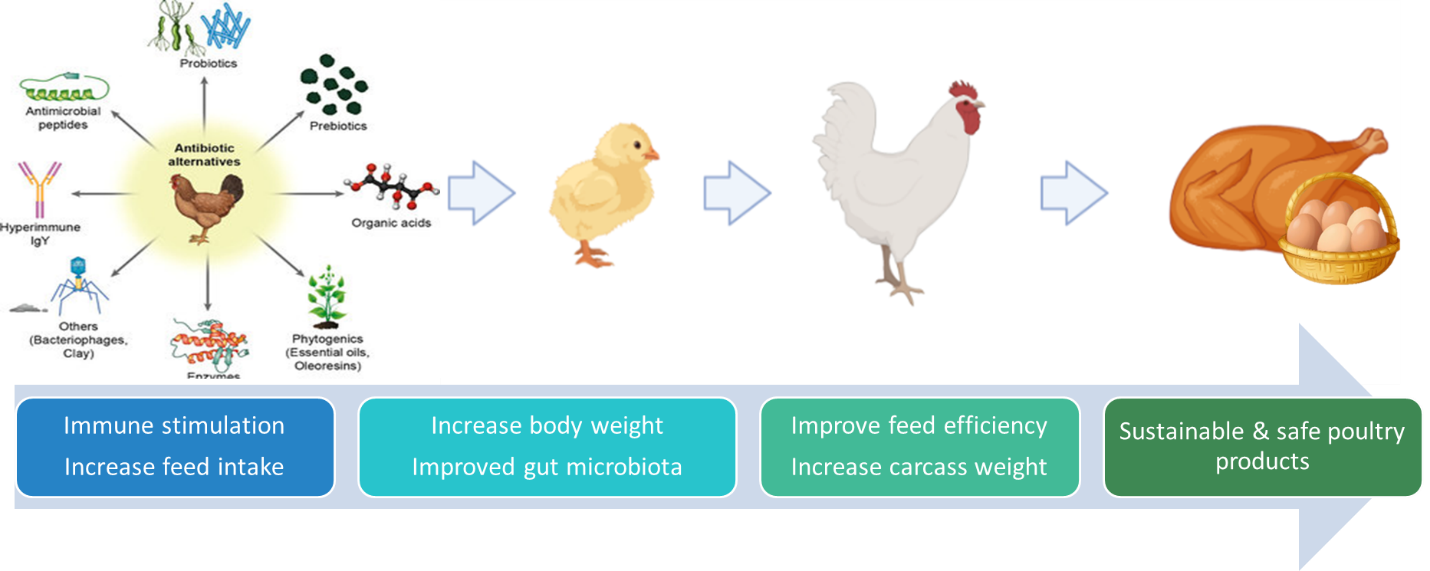
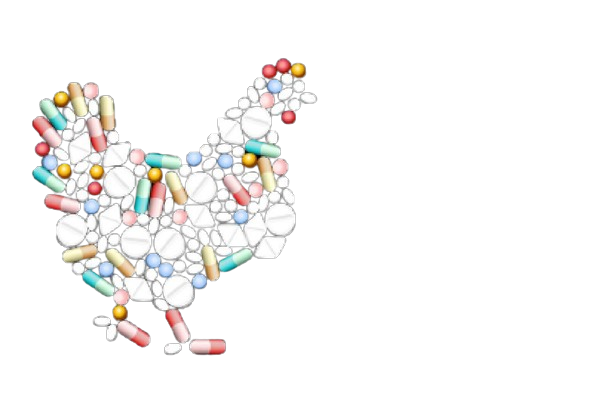
Intensive poultry production requires alternatives to
antibiotic growth promoters (AGPs) for sustainable and efficient poultry farming to feed the
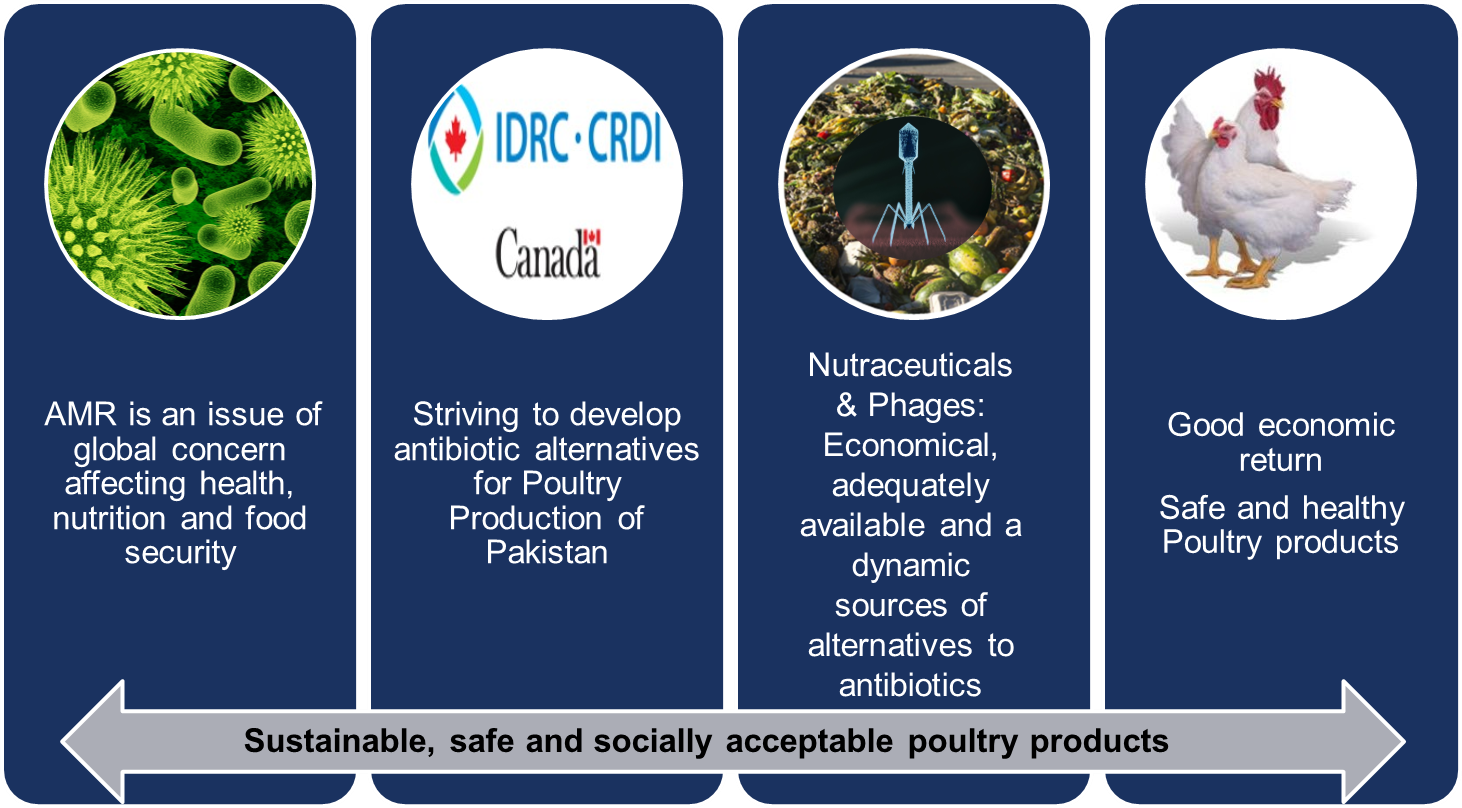
ever-increasing human population around the globe. Alternatives to AGPs are urgently required which are
potent, cost-effective, natural and safe.
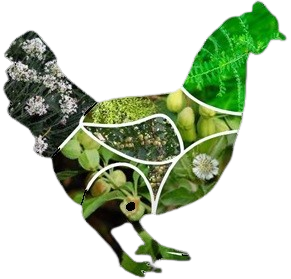
Incorporating nutraceuticals in poultry diets is certainly
considered safe, with low cost and no side effects. They can enhance feed efficiency due to positive
effects on nutrient digestibility. They can also improve immune response to pathogenic organisms,
ensuring efficient poultry production of meat and eggs. Nutraceuticals also possess significant
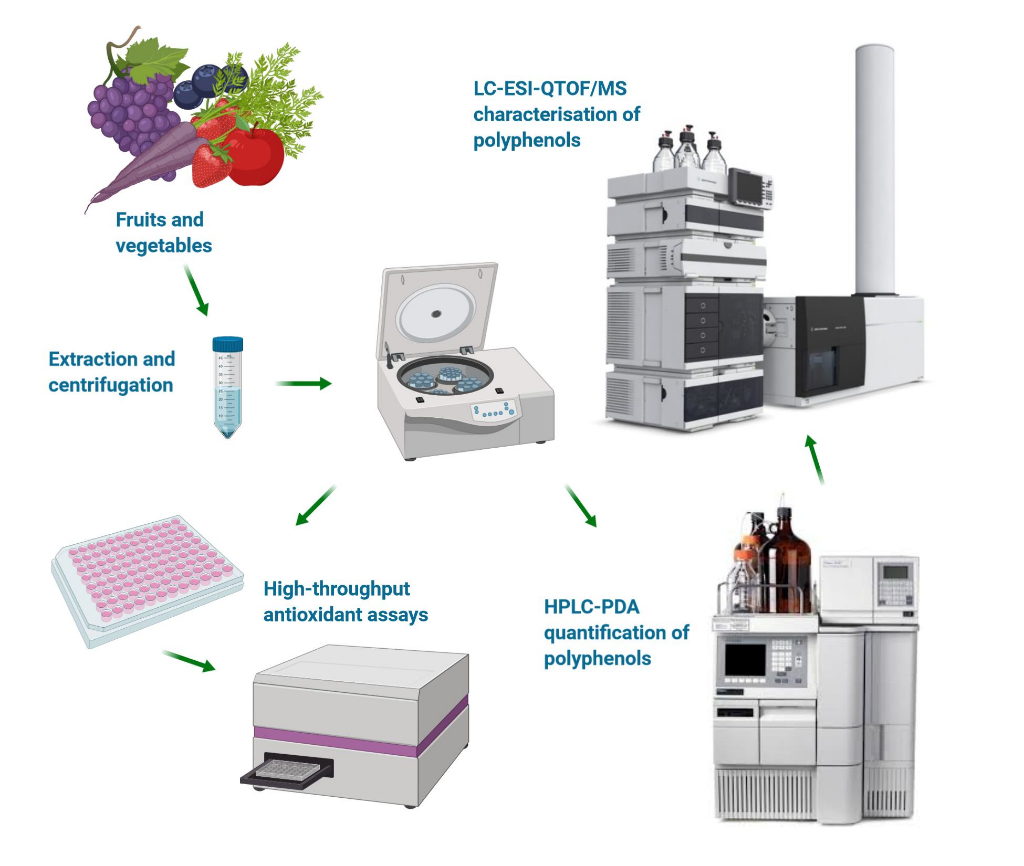
antibacterial capacity along with other health-promoting and disease-preventing effects. Fruits and
vegetables contain ample amounts of nutraceuticals and can serve as a potent source of alternatives to
antibiotics